Maritime Detection Systems
Satellite-based maritime monitoring using SAR imagery and OSINT methodologies
BRIEF
Contribution to a satellite-based maritime monitoring framework aligned with OSINT ship detection methodologies used in investigative environments.
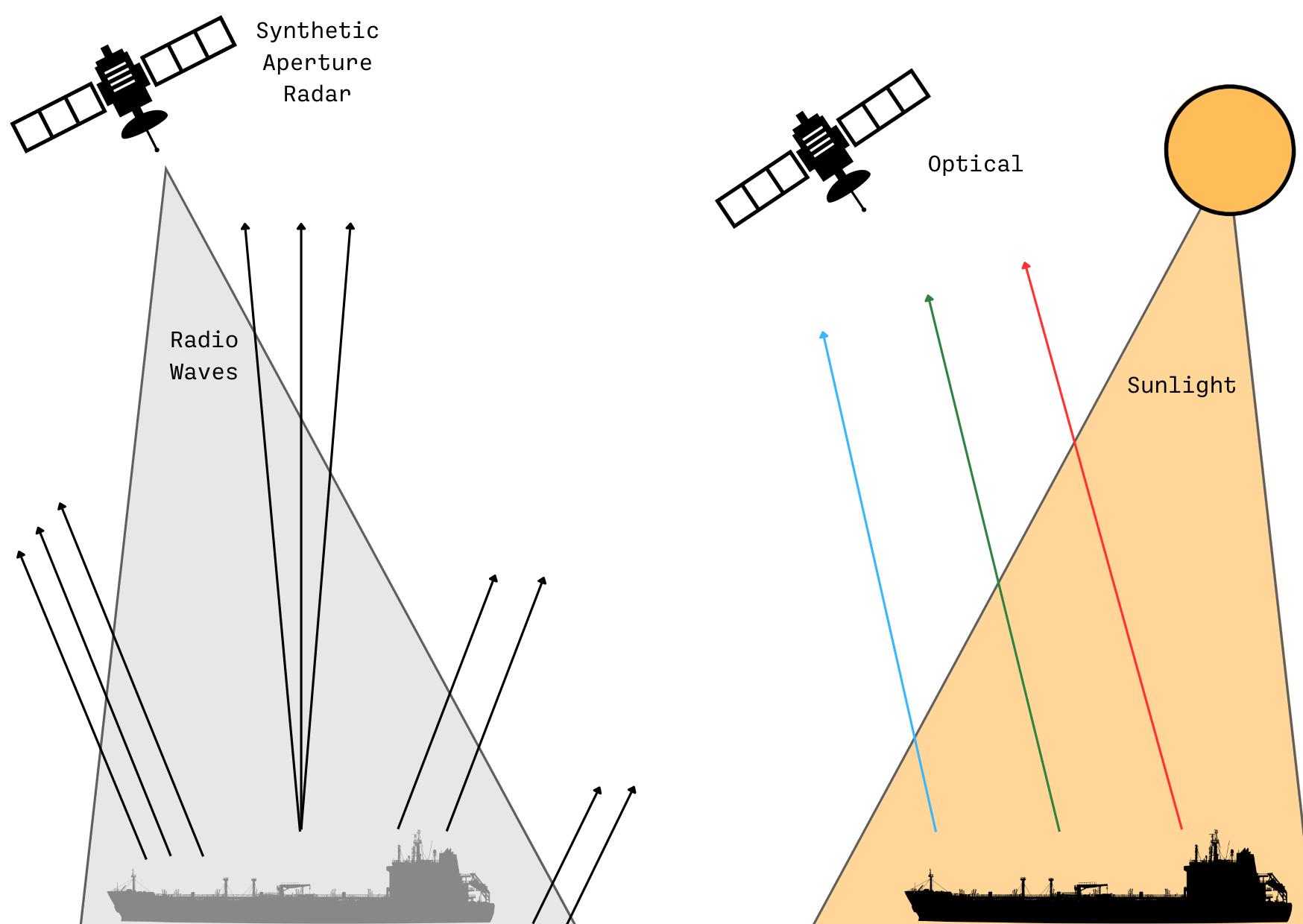
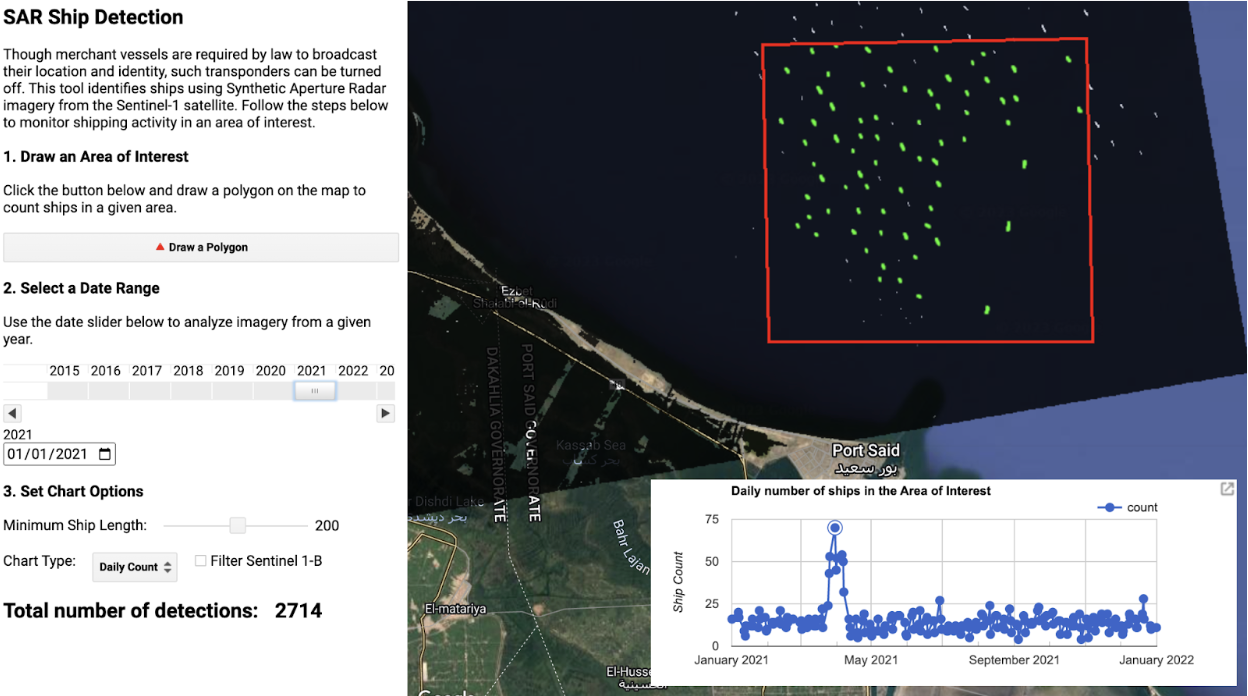
The system utilised synthetic aperture radar (SAR) imagery as the primary detection layer, exploiting high backscatter returns from vessel hulls against low-reflectance ocean surfaces. Vessel identification was extended beyond point detection through multi-method signal interpretation.
A key component involved wake detection and geometric feature extraction. Linear wake signatures were isolated using transform-based techniques such as Hough and Radon-style line detection, enabling inference of vessel direction, trajectory, and movement consistency even in noisy maritime scenes.
Spectral contrast filtering and spatial segmentation were applied to separate vessel signatures from sea clutter, particularly in low-visibility environments including cloud cover, night-time passes, and politically sensitive maritime zones.
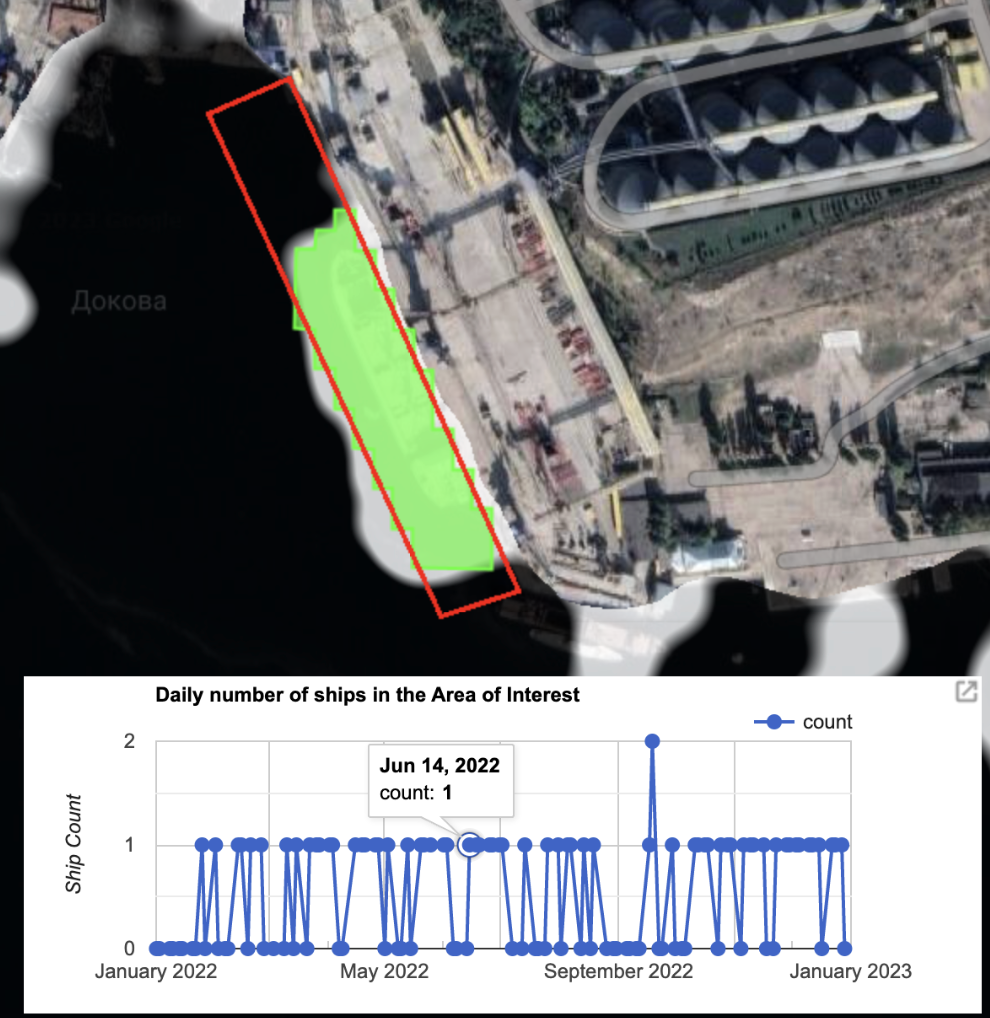
Multi-temporal satellite comparison was used to identify intermittent, non-cooperative, or AIS-silent vessels by tracking persistence of SAR signatures across successive imaging passes. Where available, AIS data was used for cross-validation, enabling classification of vessels as cooperative or dark targets.
The combined approach improved detection reliability in constrained visibility conditions and supported investigative monitoring of maritime activity where conventional tracking systems were incomplete or deliberately disabled.
OPERATIONAL DETAILS
- >Utilised synthetic aperture radar (SAR) imagery for primary vessel detection layer
- >Developed wake detection and geometric feature extraction using Hough and Radon-style line detection
- >Applied spectral contrast filtering and spatial segmentation for vessel-sea clutter separation
- >Implemented multi-temporal satellite comparison to identify AIS-silent and non-cooperative vessels
- >Supported investigative monitoring of maritime activity in constrained visibility conditions
TAGS
EXHIBITS